
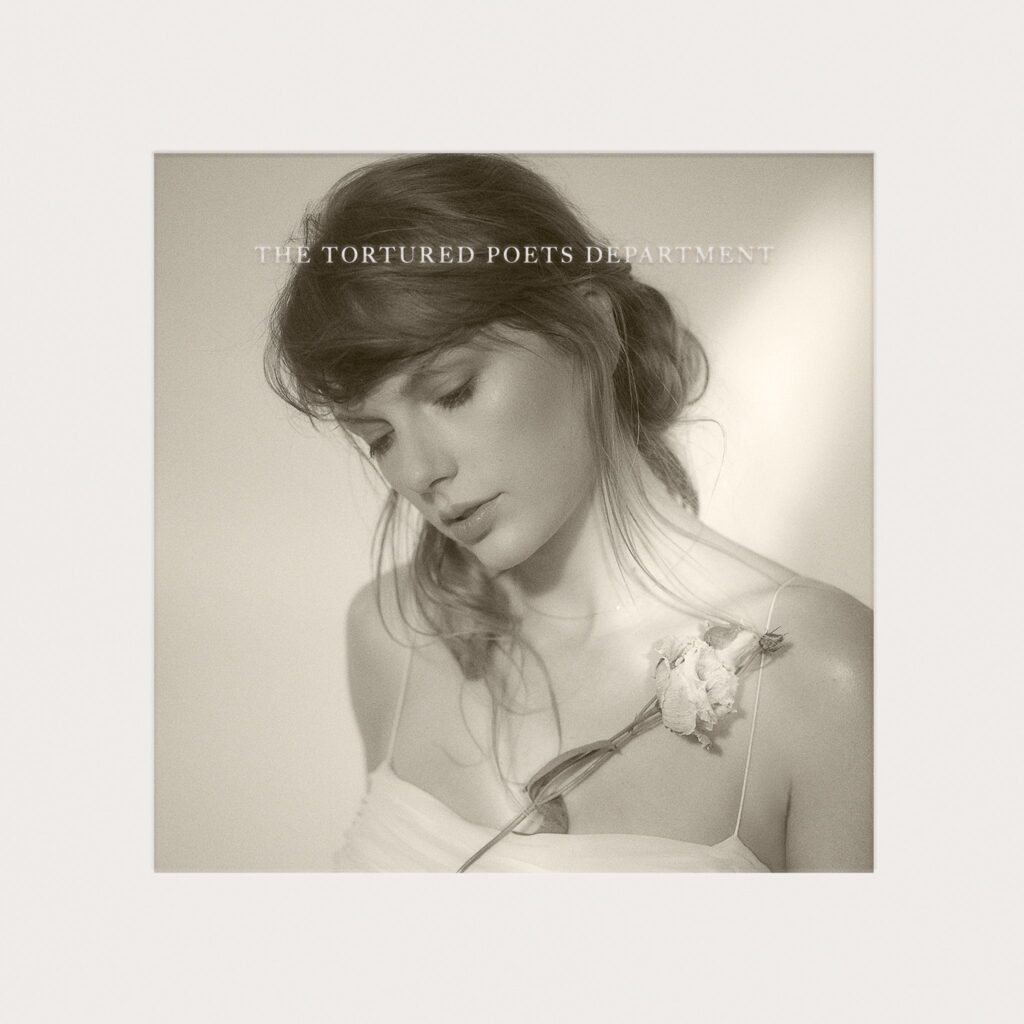
Photo Credit: Taylor Nation on X/Twitter
Written by my Aunt Laur (She’s a Swifitie English Teacher)
The Romantic Period is generally accepted to have occurred from 1800-1850. It is marked as a time when writers, musicians, and artists believed the world offered unlimited possibilities. A time when they could live their lives the way they wished. The Romantic was a person who revered nature, who felt emotions with a deep intensity, and who believed imagination was necessary to understand the world. Romantics lived their lives on their terms in some cases rejecting societal norms. They supported revolutions, advocated for freedom and acceptance of marginalized groups, and believed that art could change the world. They were responding to the events of the world at this time by rebelling and sharing their truth.
Taylor Swift told us in 1989 that she and her friends are the “New Romantics.” She uses a lot of allusion in her songs that can be traced to the Romantic Period. “The Lakes where the poets went to die” refers to Williams Wordsworth (who is name-checked in the song), Samuel Taylor Coleridge, and other Romantic poets who lived and died in the Lakes district. Samuel Taylor Coleridge was also the author of the poem “The Rime of the Ancient Mariner” about the man who killed the albatross and was forced to wear it around his neck for penance. However, in Taylor Swift’s allusion, “The Albatross” is not killed and returns to save the man. Hans Christian Andersen wrote “The Little Mermaid” during the Romantic Period, and although he may not have included the line “But Daddy I Love Him,” the sentiment was implied.
Nathaniel Hawthorne’s The Scarlet Letter is considered a Romantic novel. According to Ms. Swift, in the song “New Romantics,” her scarlet letter is better, and in “Love Story,” Juliet is described as “a scarlet letter.” The end of the Romantic Period included Alice in Wonderland by Lewis Carroll, referenced in “Wonderland” and “Long Story Short.” Also possibly referring to Alice’s world may be the hedge maze in “Guilty as Sin” and the maze in her mind in “Labyrinth.” Peter Pan just missed the Romantic Era but was obviously influenced by the fantasy and vivid descriptions noted during the period. References to this novel are found in “Cardigan” and “Peter.”
Grimms’ Fairy Tales was published during the Romantic Period. The fairytale motif is present in multiple songs, including “Today Was a Fairytale,” “Long Live,” and “Enchanted.” The song “The Best Day” mentions “Snow White and the Seven Dwarves” and princesses. Although the song “Bejeweled” might not seem like a fairytale reference, the video shows the similarities to “Cinderella.” The song “So Long, London” talks about “fairy lights in the mist” that were known to lead people astray in fairytales. “Clara Bow” includes the line, “Beauty is a beast that roars/ Down on all fours/ Demanding more.” Fairytales have clearly influenced Taylor Swift throughout her career.
The somewhat misinterpreted line “I’d say the 1830s” in “I Hate It Here” was Taylor Swift’s way of stating she would have liked to be alive during the Romantic Period when these artists were creating these descriptive, emotional, and fantastical works. The Romantics were the rock (or pop) stars of their day. Lord Byron created the moody Byronic Hero, which some compare to the “Anti-hero.” The deep emotions combined with the sudden fame of the artists would sometimes result in issues with anxiety, addiction, and depression. Although the artists believed the world offered many possibilities, they also struggled at times.
The Romantic Period is known for its emotional works, full of hope, love, longing, and references to folklore. All things that can be found in Taylor Swift’s work. This artist who seamlessly rules the world is a new – and true Romantic.
Sources
Swift, Taylor, et al. “But Daddy I love Him.”The Tortured Poet’s Department. 19 April 2024.
Swift, Taylor, et al. “New Romantics.” 1989. 27 October 2014.
Swift, Taylor, and Jack Antonoff. “Guilty as Sin”. The Tortured Poet’s Department. 19 April 2024.
Swift, Taylor, and Jack Antonoff. “Labyrinth.” Midnights. 22 October 2022.
Swift, Taylor, and Jack Antonoff. “The Lakes.” folklore. 24 July 2021.
Swift, Taylor, and Nathan Chapman. “Love Story.” Fearless. 12 September 2008.
Swift, Taylor, and Aaron Dessner. “Clara Bow.” The Tortured Poets Department. 19 April 2024.
Swift, Taylor, and Aaron Dessner. “I Hate It Here.” The Tortured Poet’s Department: Anthology. 19 April 2024.
Swift, Taylor, and Aaron Dessner. “So Long, London.” The Tortured Poet’s Department. 19 April 2024.
Swift, Taylor, and Aaron Dessner. “The Albatross.” The Tortured Poet’s Department: Anthology. 19 April 2024.